Let us return to the roots of our faith
by Fr. Paul Celestine Lokunume | 06/19/2026 | Weekly ReflectionDear Friends,
There is a classic proverb by an unknown author that says: "An old broom sweeps better." This proverb speaks volumes when applied to how we prepare and celebrate the Sacraments in modern times. Before proceeding any further, I would like to remind ourselves of what the Sacraments are and how many there are.
Sacraments are outward signs of inward grace, instituted by Christ to help individuals in their spiritual life and to grow in holiness. There are seven Sacraments, namely: Baptism, Confirmation, Eucharist, Penance (Reconciliation), Anointing of the Sick, Matrimony, and Holy Orders. Sacraments are more than mere signs: They help to make people holy and build up the body of Christ. Sacraments are a way to relate to God throughout life's transitions, and they help us to give praise and worship to God. Through the sacraments Jesus remains with His people, strengthening, healing, feeding, and forgiving them as they face life's challenges.
Because the Sacraments are very important in our lives as mysteries and signs of the sacred presence of our God in our midst, their administration and reception require adequate preparation, reverence, and intentional presence. All the Sacraments are for the living, and therefore they have an important place in our Liturgy and faith life. A rush celebration of the Sacraments not only compromises them, but also is symptomatic of a culture or attitude where God becomes second hand, and the human programs, desires, and wills take priority.
The world we are in has become busier and more complex that we can easily forget or simply get tempted to put the sacraments into the fast food basket. There is no such thing as a "quick confession" before or after Mass, simply because some people think or seem busier than others. God, who gives us life and time, cannot be given very little of what He has generously given, while we can spend more time, minutes, hours, days, weeks, or even months for ourselves on less important entertainment or simply on Social media.
As the Commandments of God say, "I am the Lord your God. Thou shalt not adore/worship any other God but me." And, again, "Keep the Lord's day Holy." The Church commands us to keep Sunday and days of obligation in their proper place and importance. Coming to church to pray, let us avoid combining that good intention with other time-bound appointments. God deserves more than leftovers of our time.
God's house is a Sacred place for worship and not a venue for scrolling, checking and answering phone messages. On occasion we do this while the Sacraments are being celebrated. Complacency is not meritorious.
Come early, recollect yourself, and know that you are in the presence of God and you are in His presence to worship, to listen to his word, and soon to receive Him in the Eucharist. Be in a state of Grace before receiving Holy Communion by going for a well-prepared confession with a prior self-examination of Conscience. Confession is not a place for storytelling or a space for counseling, which takes more time, denying others the time they need to confess and be absolved of their own sins.
During Mass it is not spiritually healthy to rush out of the Church immediately after receiving Holy Communion or before the final blessings or before the priests and other ministers have returned to the Sacristy. Instead, stay and pray. These basic etiquettes help us put God first and help us to give ourselves totally to Him in thanksgiving for the many things He has given or done for us.
The Eucharist nourishes and transforms us. Jesus Himself says: "Whoever eats my flesh and drinks my blood remains in me and I in him" (Jn 6:56). The Eucharist is not a reward for the perfect but food for the pilgrims: It strengthens us in our struggles, heals our wounds, and gives us the grace to persevere in faith because:
- The Eucharist is Jesus truly present among us
- The Eucharist is food that nourishes and transforms us
- The Eucharist sends us forth to become Christ's presence in the world
Therefore, we must:
- Believe in Him.
- Receive Him.
- Become like Him.
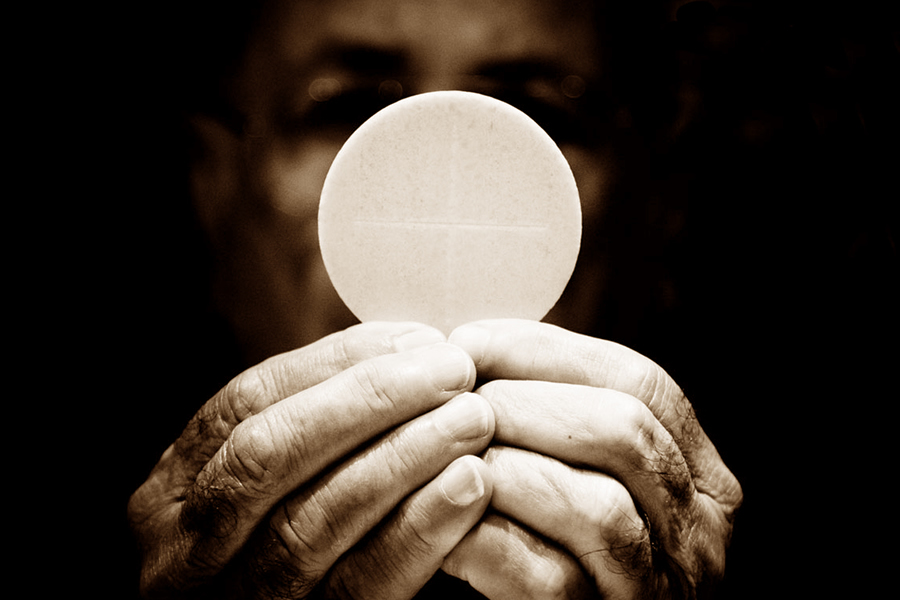
The saying that "the old broom sweeps better" is meant to rekindle in us the traditional experience of Christians in the early church, where the Sacraments were given more significance, especially "The Holy Eucharist," where Jesus gives His Body and Blood to us. The Eucharist is not just a symbol: It is Jesus Himself, lovingly remaining with us in every Mass, every tabernacle, and every Eucharistic adoration chapel around the world.
At the heart of celebrating the Body and Blood of Christ in the Eucharist lies one simple truth: God does not abandon His people. He continues to feed them. Therefore, let us go back to the old guidelines regarding Sunday and other days of obligation.
Last but not least, as June is considered the month of devotion to the Most Sacred Heart of Jesus, let us devotedly turn to Him and pray with the intercession of the Immaculate Heart of Mary so that we become more prepared and wholly involved in our celebrations and reception of the Sacraments. Reverence is the old broom that makes God's word the lamp unto our feet and a light unto our paths. The word of God is truth. John 17:17. The word of God is "living and effective." - Hebrews 4:12.
Brothers and Sisters in Christ, the Holy Word of God and the Eucharist mean one and the same. I pray and hope that all of us become mindful and aware of what goes on inside us while celebrating the Sacraments. It is not about us, but about the Lord who has chosen to live among us and to be with us always until the end of time. Amen.
Most Sacred Heart of Jesus, have mercy on us.
Immaculate Heart of Mary, pray for our salvation.
St. Joseph, pray for us.
Jesus, I trust in you.