Never ignore the stranger in front of you – It might be Christ Himself
by Fr. Robert Aliunzi | 04/17/2026 | Weekly ReflectionDear Friends,
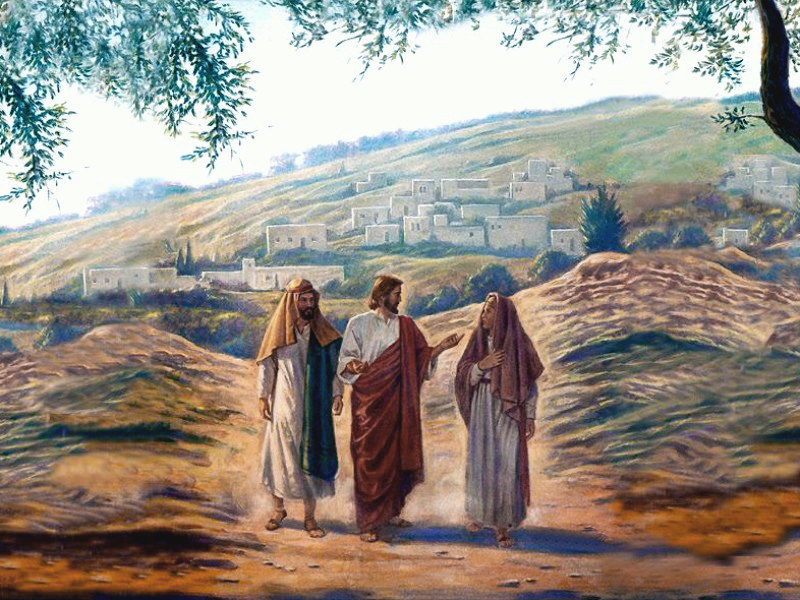
The title of this reflection is inspired by the Gospel of the two disciples on the road to Emmaus (Luke 24:13–35). In that familiar and beautiful story, the disciples encounter a stranger along the way—only to discover, in the end, that it is the Risen Lord himself.
As they journey, weighed down by confusion and disappointment, Jesus himself draws near and walks with them. Yet they do not recognize him. Instead, they recount to this “stranger” all that has happened concerning Jesus of Nazareth—their dashed hopes, their sorrow, their uncertainty. And then something remarkable happens.
Beginning with Moses and all the prophets, Jesus interprets the Scriptures for them, revealing how everything points to him. What seemed like defeat is unveiled as part of God’s saving plan. What seemed like an ending is, in truth, a new beginning.
This moment is not isolated—it reflects the entire pattern of salvation history. Again and again, God draws near to his people. He draws near to Abraham with a promise. He draws near to Israel in their bondage and leads them to freedom. He draws near through the Law, the kings, and the prophets. And ultimately, he draws near in the Incarnation—God made flesh in Jesus Christ.
Even after the Resurrection, this pattern continues: Christ draws near, quietly and often unrecognized, walking with his people in their daily lives.
The turning point in the Emmaus story comes with a simple yet profound act of hospitality. The disciples urge the stranger, “Stay with us.” He accepts. At table, he takes bread, blesses it, breaks it, and gives it to them. In that moment—the breaking of the bread—their eyes are opened. They recognize him. And then he vanishes.
But something has changed. They say to one another, “Were not our hearts burning within us while he spoke to us on the way?” Their sorrow has turned into joy, their confusion into clarity, their fear into mission. They rise immediately and return to Jerusalem to share the Good News.
This Gospel speaks directly to us, dear friends. Christ continues to draw near—to walk beside us, to speak to us, to reveal himself. He comes to us in ways we may not expect in Scripture, in the Eucharist, in the gathered community—and yes, even in the stranger.
How often do we fail to recognize him? How often do we overlook Christ because he comes to us in ordinary, even inconvenient, ways? The invitation of this Sunday is clear: do not ignore the stranger. For it may be Christ who stands before you—seeking welcome, offering grace.
In a special way, we encounter him in the Eucharist. In every Mass, the same Risen Lord who walked with the disciples now comes to us. He speaks in the Scriptures. He is present in the community. And in the breaking of the bread, he gives us not something, but himself.
As Bishop Robert Barron beautifully reminds us: “The Eucharist is Christ himself, personally and actively present… It is through the lens of the Eucharist that Jesus comes most fully and vividly into focus.”
So, each time we gather for the sacred liturgy of the Eucharist, let us open our eyes and our hearts. Let us recognize him in the breaking of the bread. Let us welcome him in one another. Let us be attentive to his presence in the unexpected. And having recognized him, may we, like the disciples, rise up with renewed faith and go forth to share the Good News.
Christ is still walking our roads—often as a stranger, but always as Savior.
BACK TO LIST